 Cardamoo
When to fold in poker
Folding feels like losing. It isn't. Folding is choosing not to lose more, and learning to do it well is the fastest single upgrade available to a new player.
The best players fold constantly
Here's the number nobody tells beginners: strong players throw away most of the hands they're dealt, often before the flop. Not because they're timid, because most starting hands simply aren't worth the price of playing them. All the flair you see in highlight reels is built on a foundation of quiet, boring, correct folds. That's how they still have chips when the good spots arrive.
Fold #1: the hopeless starting hand
Look down at something like a 7 and a 2 in different suits, famously the worst starting hand in poker. The cards can't make a straight together, can't make a flush together, and even when they pair up, they pair small. Now someone bets big in front of you.
You could call. It's only chips. But that call almost never wins, and "it's only chips" is how stacks disappear one shrug at a time. When your hand is hopeless and the price is real, saving your chips is winning. The fold costs you nothing you hadn't already given.
Fold #2: the decent hand that stopped being decent
This one is harder, and it's where most beginner chips actually go. You start with something genuinely fine, say a pair of nines. You call, the flop comes… and it's three hearts. Then someone bets huge.
Your nines didn't get worse in a vacuum, the board made them worse. Three cards of one suit means any opponent holding two more of that suit has a flush, and a big bet on a board like that is usually saying exactly that. A decent start does not always stay decent. The hand you fold on the flop is the same hand a stubborn player pays three streets with.
Listen to what the bet is telling you
Bets carry information. Big bets usually mean strong hands, that's the plain-language heart of bet sizing, and a middle-strength hand facing a big bet is precisely the situation folding was invented for. Ask one question before calling: "What is this bet saying, and does my hand beat that story?" If the honest answer is no, your chips already know what to do.
When you should NOT fold
Folding is a tool, not a lifestyle. Three quick exceptions:
- Never fold when you can check. If nobody has bet, the next card is free. Take it. (This comes up constantly with draws.)
- Don't fold to tiny bets with a real hand. When the price is small and your hand has genuine chances, paying a little to continue is fine.
- Don't let one fold become ten. If opponents notice you fold to every bet, they will bet at you forever. Folding well means folding for reasons, not reflexes.
The accounting that makes it click
A chip you don't lose is worth exactly as much as a chip you win, the pot just isn't applauding when you save it. Beginners remember the pots they won; the scoreboard remembers the calls they skipped. Every hopeless call avoided is chips still in your stack for the hand where you flop a monster and actually get paid.
Practice letting go
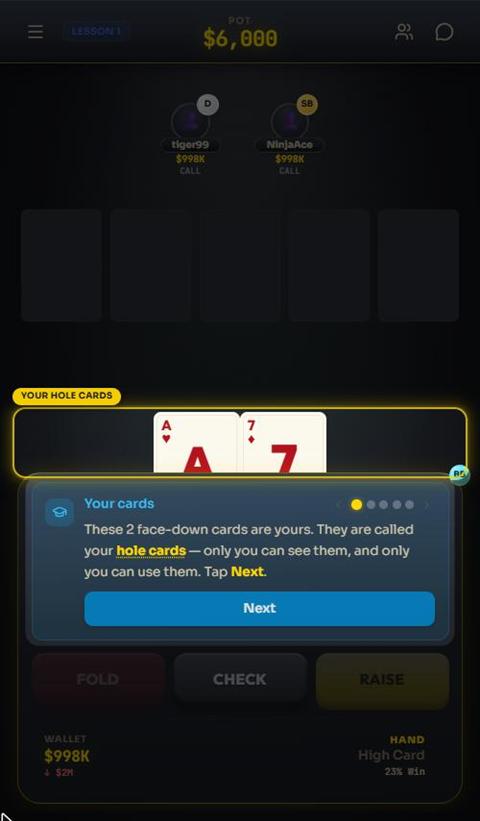
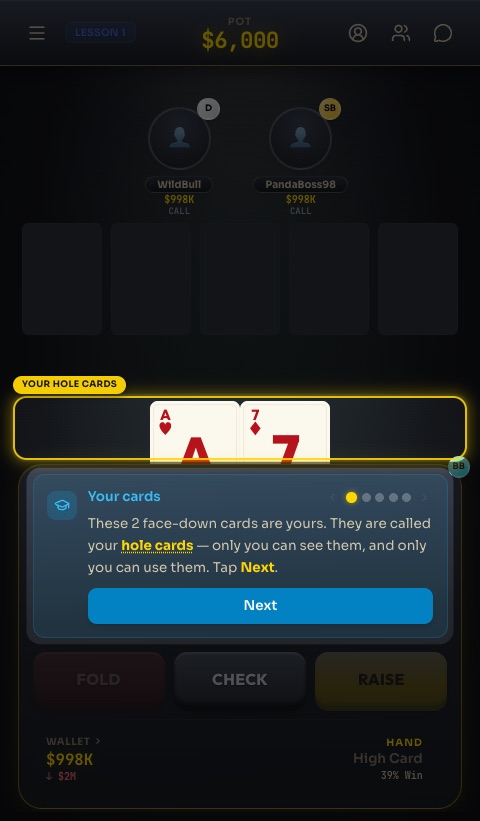
Cardamoo's folding lesson deals you a hopeless hand and a trap hand back to back, and shows you exactly why letting each one go was the winning play, at a real table, with a guide at your side.
Start the lessons, free in your browserNo account needed to try · a free account saves your progress across devices
Next: Draws and outs · Back to: The five actions