 Cardamoo
Draws and outs
Sometimes your hand isn't finished yet. It's not strong now, but one more card could turn it into something big. That in-between state is called a draw, and playing draws well is where poker starts feeling like poker.
What a draw is
A draw is an incomplete hand with a visible future. You don't have a made hand worth much at this moment, but specific cards still hidden in the deck would upgrade you to something powerful. Until one of them lands, you're "drawing", waiting on the deck to finish what your hole cards started.
The flush draw
The classic. You hold two spades, and the flop brings two more, four spades in total, needing one. Any spade on the turn or river completes a flush, one of the strongest common hands in the game. Right now, though, you might have nothing but high card. That gap between "nothing yet" and "monster soon" is the whole drama of a draw.
The straight draw
Same idea, different shape: four card values in a row, waiting for one more to complete a straight. Hold 8-9 on a 6-7-K board and either a 5 or a 10 finishes you, an "open-ended" draw, completable from both ends. If the gap is in the middle (say you need exactly a 7 to fill 5-6-8-9), fewer cards help you, and the draw is weaker. Two ends beat one hole.
Counting your outs
Your outs are the cards still unseen that complete your draw, and counting them is just arithmetic, not magic. Each suit has thirteen cards; with four spades in view, nine spades remain that would make your flush: nine outs. An open-ended straight draw has eight (two ranks complete it, four of each). A gutshot has four. More outs, better draw, it's that direct, and saying "I have nine outs" is the first step from playing feelings to playing information.
The golden rule: never give up a free card
Here's the mistake that hurts the most to watch: someone flops a flush draw, nobody bets… and they fold. If nobody has bet, checking costs zero, and the next card might complete your hand. There is no version of poker where surrendering a free chance is right. When the price is nothing, always see the next card. (If you're fuzzy on when checking is available, the actions guide covers it.)
When the draw isn't free
Draws get interesting when someone bets into them, because now you're paying for a card that only might help. Keep the reasoning qualitative and it stays easy:
- Small bet, big draw, a cheap price for nine outs at a strong hand is usually worth paying, especially with big pots to win if you hit.
- Huge bet, weak draw, paying a fortune to chase four outs is how draws get their bad reputation. That's a fold.
- In between, think about the pot: the bigger the reward already sitting in the middle, the more a chase is worth. Players formalize this as "pot odds", but the instinct, big pot justifies the chase, tiny pot doesn't, carries you a long way first.
When it arrives
The turn brings your fifth spade. The draw is now a flush, a made hand, and a strong one. Two notes for that happy moment: opponents' small bets are easy calls now (let them keep contributing), and remember the board tells everyone a story. Three suited cards on the table warn observant opponents that flushes are possible, which is exactly why boards like that make made-hand players nervous, and why you should be the nervous one when it's not your suit out there.
Flop a draw and play it out
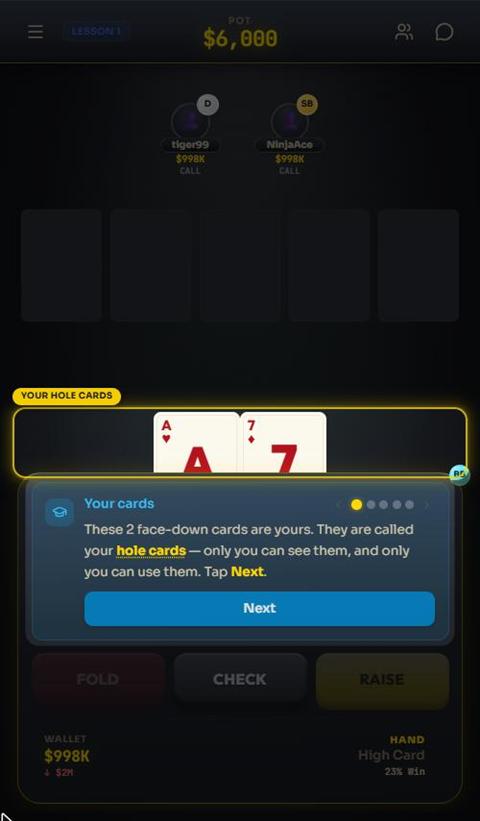
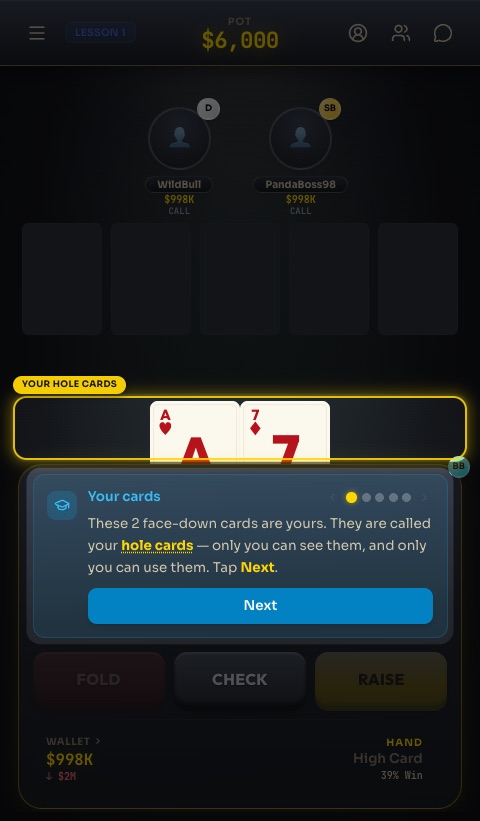
Cardamoo's draws lesson deals you a real flush draw and walks you through the whole arc, the free card, the arrival, and the payoff, one decision at a time, at a real table.
Start the lessons, free in your browserNo account needed to try · a free account saves your progress across devices
Next: Bet sizing · Back to: When to fold