 Cardamoo
Bet sizing: every bet tells a story
How much you bet says as much as whether you bet. Sizes are the language of poker, and once you can read them, other people's chips start explaining their hands to you.
Why the amount matters
Any bet asks the table a question, but the size sets the tone of the interrogation. A tiny bet asks politely and invites everyone along. A pot-sized bet demands an answer and prices out the curious. Same action, completely different conversation, which is why "how much?" deserves as much thought as "should I?"
The value bet: charging for the privilege
When you're probably ahead, you want chips going into the pot, that's the whole point of finally holding the best hand. A value bet is a bet made with a strong hand, hoping a weaker hand pays you off.
The beginner instinct with a monster is to check and act innocent. But checking wins you nothing extra with the best hand, you're holding the winning lottery ticket and refusing to cash it. The trick is the size: bet an amount a worse hand can talk itself into calling. Modest, repeated bets that keep an opponent comfortable usually earn more than one terrifying shove that sends everyone running.
Don't force every street
Value betting doesn't mean flooring it on every card. After your bet gets called and the pot grows, a calm check on the next street often does more work, it keeps weaker hands in, lets opponents catch just enough to pay you later, and makes your next bet easier to call. Pressure is a seasoning, not a sauce.
Reading their sizes: big usually means big
Here's the plain-language rule that wins beginners the most chips: at casual tables, big bets usually mean strong hands, and small bets are often unsure. It's not a law of physics, good players deliberately break it, and that's called bluffing, but as a default read on everyday opponents, it's remarkably reliable.
So when you hold a middle-strength hand, say, a middling pair, and someone fires a huge bet at you, ask what that bet is claiming. A hand that beats yours, almost always. A middle pair against a big bet is exactly how chips disappear; the discipline to fold there is worth more than any fancy move you'll ever learn.
Sizing relative to the pot
Bet sizes only make sense relative to what's already in the middle. Players talk in fractions, "half pot", "full pot", because a 500-chip bet is enormous into a tiny pot and a rounding error into a huge one. Two useful anchors:
- Around half the pot, a solid, ordinary bet: enough to charge draws and ask real questions, small enough to get called by worse.
- Pot-sized or more, a statement. Made honestly, it says "I have it and I'm charging you." Heard from an opponent, treat it accordingly.
And avoid the extremes that leak information by accident: bets so tiny they invite the whole table in for free, and panicked overbets that only ever get called by hands that beat you.
Your sizes tell a story too
Everything you use to read opponents, they can use to read you. If your big bets are always monsters and your small bets are always doubts, observant players will fold when you're strong and pounce when you're weak. The first fix is simply awareness; the deeper fix, telling the same story with strong hands and empty ones, is where bluffing begins.
Bet a monster properly
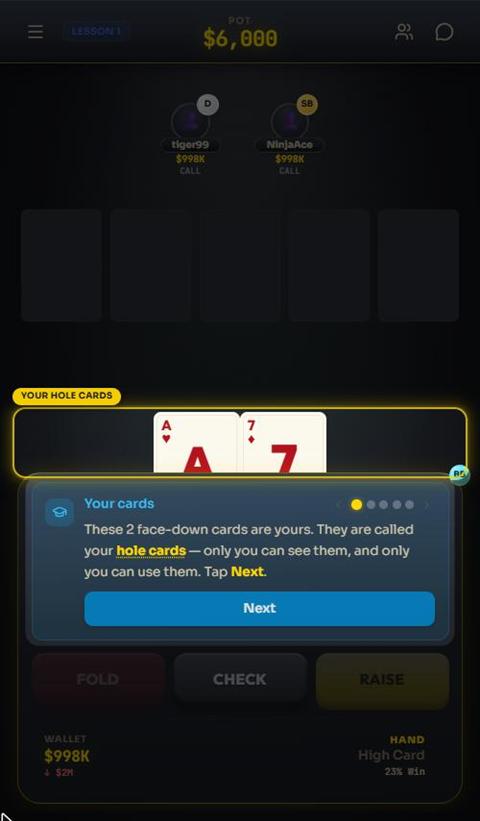
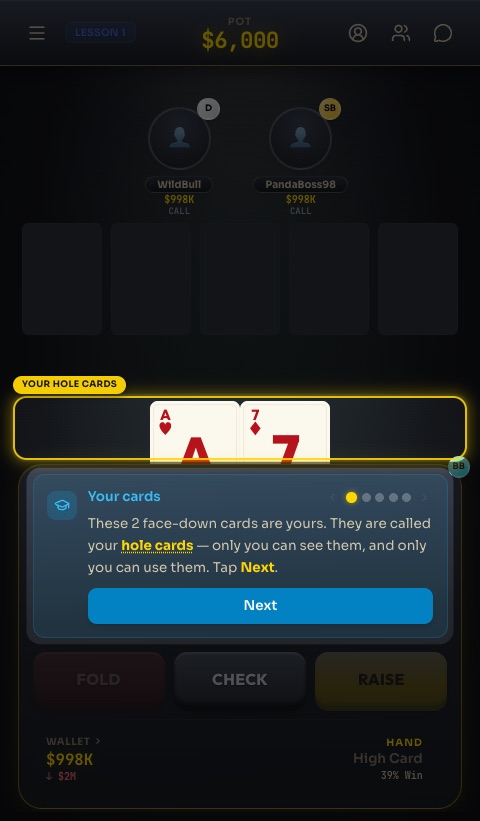
Cardamoo's bet-sizing lesson deals you pocket aces and teaches you to charge for them, then flips the table and makes you face a big bet with a so-so hand. Both sides of the story, in two hands.
Start the lessons, free in your browserNo account needed to try · a free account saves your progress across devices
Next: How to bluff · Back to: Draws and outs