 Cardamoo
How to play Texas Hold'em
Texas Hold'em is the most-played poker game in the world, and the rules fit on one page. Here's everything you need to sit down at a table for the first time.
The goal
Win chips. Every hand builds a pot, the pile of chips everyone has bet, and there are exactly two ways to take it:
- Have the best hand when the betting is done and the cards get flipped (the showdown), or
- Be the last player standing because everyone else folded.
That second route matters more than beginners expect. You don't need good cards to win a pot, you need everyone else to believe you have them. That's the game.
What you're dealt
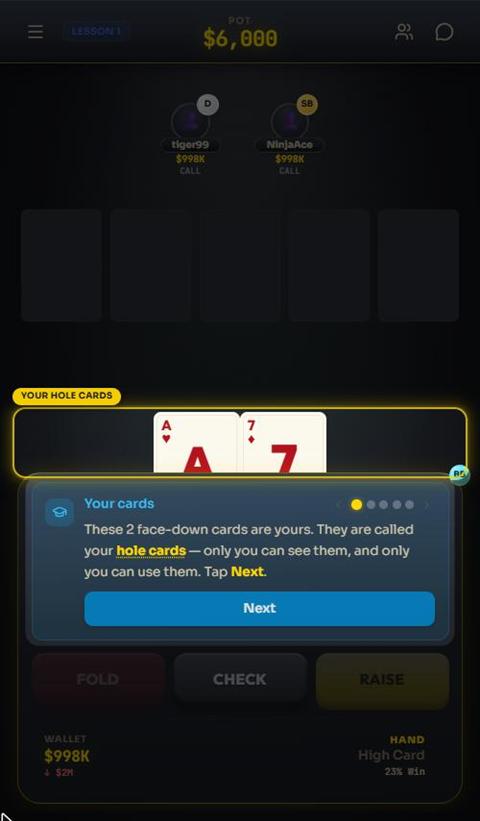
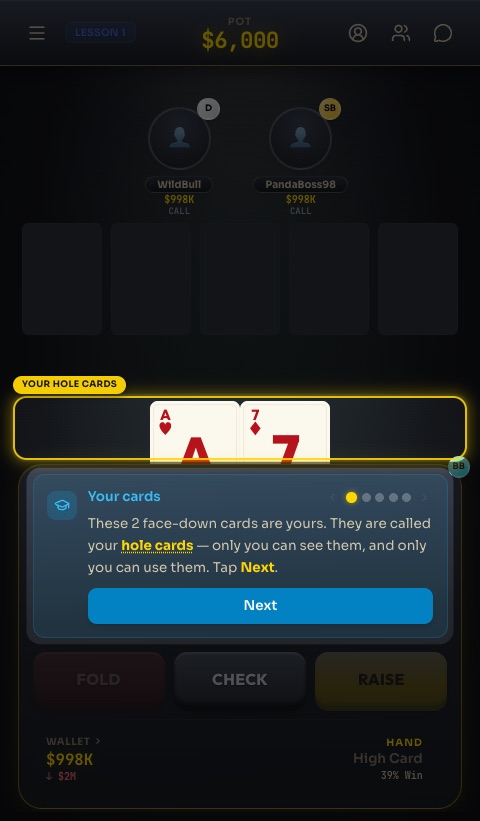
Each player gets two hole cards, face down, that only they can see. Over the course of the hand, five community cards are dealt face up in the middle of the table, shared by everyone.
Watch the same hand unfold through the four rounds below, your cards on the left, the board filling in on the right.
Your final hand is the best five-card combination you can make from those seven cards, your two plus the five on the table. You can use both of your hole cards, just one, or none at all. If you're not sure what beats what yet, keep the hand rankings open in another tab, it's step 2.
The blinds start the action
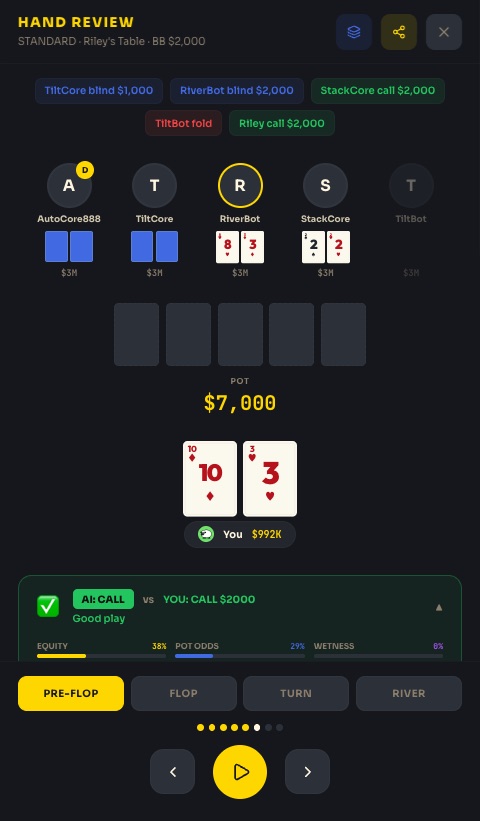
Before any cards are dealt, the two players to the left of the dealer button post forced bets called the small blind and big blind. They exist so there's always something in the pot worth fighting for. The button moves one seat clockwise every hand, so everyone takes their turn paying. Blinds get a full guide of their own, for now, just know that's why there are chips in the middle before anyone has acted.
The four betting rounds
1. Pre-flop
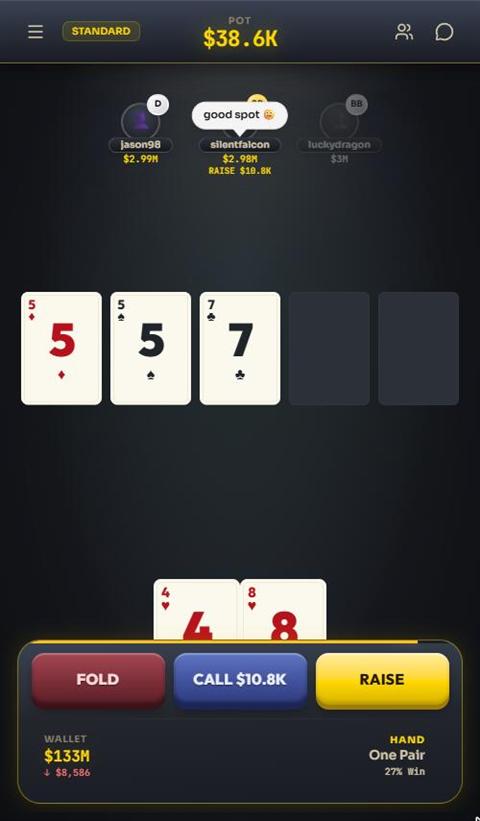
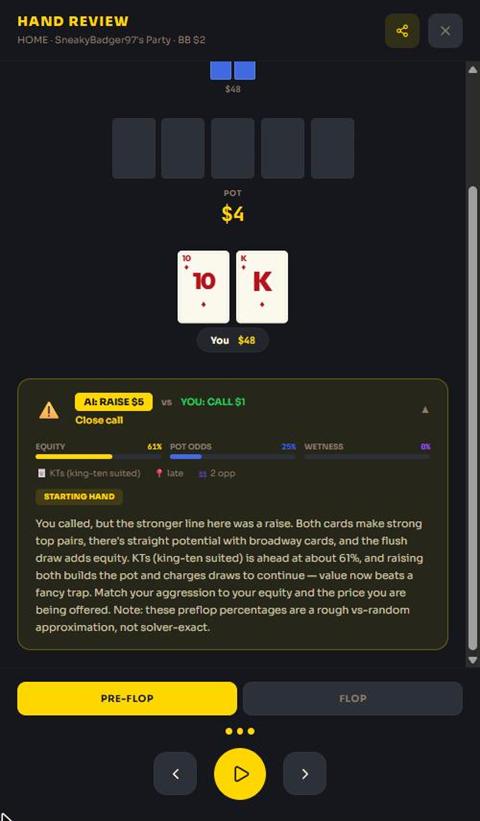
Everyone looks at their hole cards and the first betting round begins. Since the blinds are already in, staying in the hand costs at least the big blind. This is where you make your first real decision: are these two cards worth playing?
2. The flop
Three community cards are dealt face up at once. Suddenly you know most of your final hand. Another betting round follows, starting with the first active player left of the button.
3. The turn
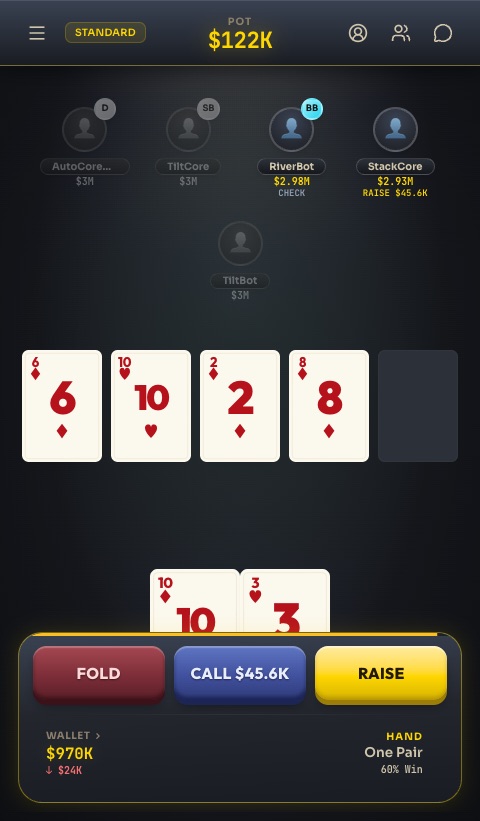
A fourth community card. Another betting round. The pots are getting bigger now, and so is the cost of a bad decision.
4. The river
The fifth and final community card, and the last betting round. No more cards are coming, every bet from here is about what everyone already holds, and what they can make each other believe.
The actions
On your turn, you'll always have some of these options:
- Check, pass the action along without betting. Only possible when nobody has bet before you in this round.
- Bet, put chips in when nobody else has. Everyone after you must at least match it to stay in.
- Call, match the current bet and stay in the hand.
- Raise, match the current bet and add more, putting the pressure back on everyone else.
- Fold, throw your cards away and give up the pot. You lose whatever you've already put in, and nothing more.
- All-in, bet every chip you have. You can't be forced out of the hand after this, but you can't win more from each player than you put in.
These five moves are the entire vocabulary of poker, and knowing exactly when each is available saves you real chips, there's a full guide to the actions, including the mix-ups that cost beginners the most.
The showdown
If two or more players are still in after the river betting, cards get flipped and the best five-card hand takes the pot. If the best hands are exactly equal, the pot is split. And if everyone folds to a single player at any point, showdown never happens. They take the pot without ever showing their cards.
Tips for your first hands
- Play fewer hands than feels natural. Most starting hands aren't worth the big blind. Folding early and often is what solid players do.
- Position is power. Acting after other players means acting with more information. The same cards are worth more when you're last to act, here's why acting last wins.
- Folding is a fine play. Beginners lose the most chips calling bets "just to see". Every chip you don't lose is a chip you still have. (More in when to fold.)
- Watch the board, not just your cards. Three cards of one suit on the table means someone might have a flush, even if your own hand is pretty.
Now play it, with a guide
You know the shape of a hand. Cardamoo's nine guided lessons put you at a real table and walk you through real hands, decision by decision, no pressure, no stakes, and a bonus-chip reward when you graduate.
Start the lessons, free in your browserNo account needed to try · a free account saves your progress across devices
Next: Poker hand rankings · What are blinds? · The five actions · Glossary